
🚨 In a DIY emergency or rush?
Skip the details and jump straight to our 30-second cheat sheet for the most crucial info.
I still remember the first time my shallow well jet pump “worked” but my faucets didn’t. The motor was humming along like it had somewhere to be, but the pressure gauge sat there like a dead fish and the house had nothing but a sad spit of air.
If that sounds familiar, there’s a good chance your pump lost its prime. The fix is usually simple: get the pump housing and suction line full of water again, then bleed the trapped air so the pump can actually lift water.
First, make sure you have the right problem
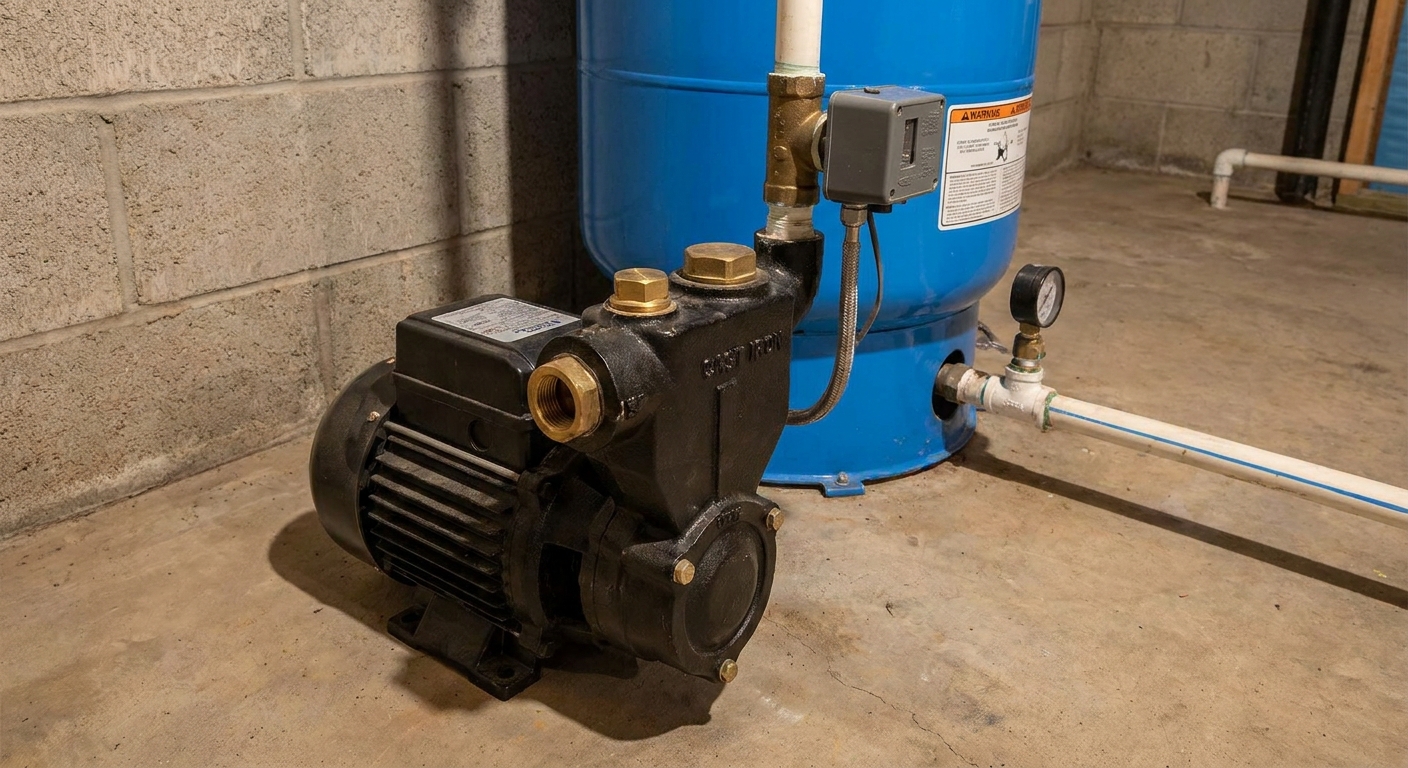
This article is for an above-ground shallow well jet pump that runs or spins but moves no water or only pushes air.
Quick gut-check on pump type:
- Shallow well jet pump: pump sits above ground and usually has one suction pipe going to the well (often 1-1/4 inch) and one discharge pipe to the tank/house.
- Deep well jet pump: pump is above ground but uses two pipes down the well.
- Submersible pump: pump is down in the well and you do not prime it from the surface like this.
- Pump runs, no water, pressure won’t build: likely lost prime, suction leak, or foot valve issue. Keep reading.
- Pump never starts: that is an electrical or pressure switch problem. Head to our Well Pump Won’t Turn On? What to Check First page for that checklist.
Typical lost-prime clues:
- Motor runs, but pressure gauge stays near 0 or doesn’t climb.
- You hear gurgling or a “whooshing” sound at the pump.
- Water comes in short bursts, then turns to air.
- It worked yesterday, then after a power outage or running a hose for a long time it stopped delivering water.
Safety and prep
Water and electricity are a bad combo. Do this before you open anything.
- Shut off power to the pump at the breaker.
- Let the pump cool for a few minutes if it has been running dry. Dry-running overheats seals fast.
- Keep a towel and shallow pan under the pump. Priming is never as tidy as it should be.
If you have any doubt about wiring, a wet floor, or a damaged cord, stop and call a pro.
Tools and supplies
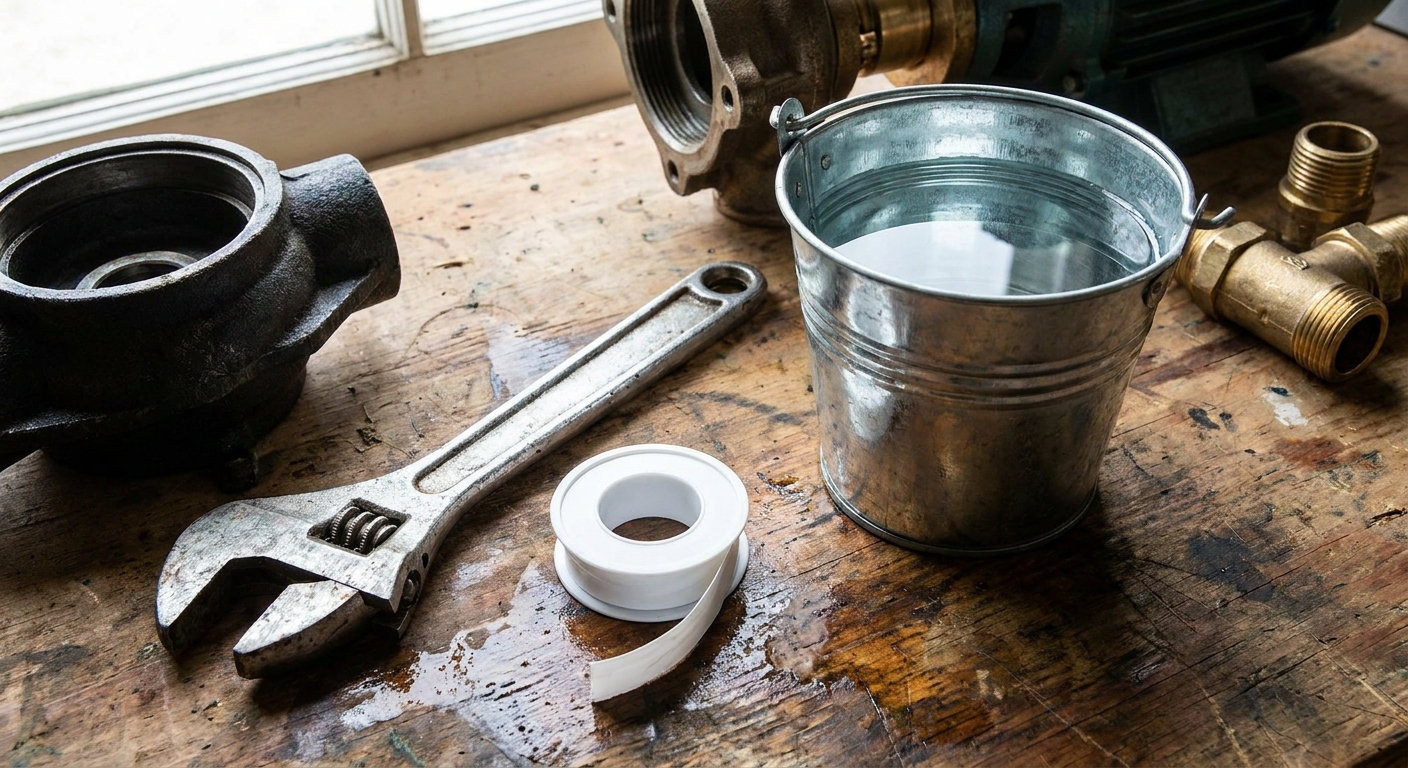
- Adjustable wrench or correctly sized wrench for the priming plug
- Screwdriver (for hose clamps or a vent or bleed screw, if your pump has one)
- Garden hose or 1 to 2 gallon bucket
- Clean water for priming (potable is best)
- Teflon tape or pipe dope (for resealing the priming plug)
- Flashlight
How to reprime a shallow well jet pump
The goal is simple: flood the pump housing and suction line with water so the impeller can create suction again.
Step 1: Shut off water use
Shut off outdoor or sprinkler valves and stop water use in the house. Then close all faucets for the first part of priming.
Why: At the start, you want the pump to build pressure instead of just pushing air out an open line.
One exception: Some systems have a bleed screw or vent at the pump or tank tee. If yours does, it can help purge air once you have water in the housing. If you do not have a vent, you will bleed air at a faucet later.
Step 2: Find the priming plug
Most jet pumps have a priming plug on top of the pump body. It is usually a threaded plug, often square-head or hex-head, near the pressure gauge or the discharge outlet.
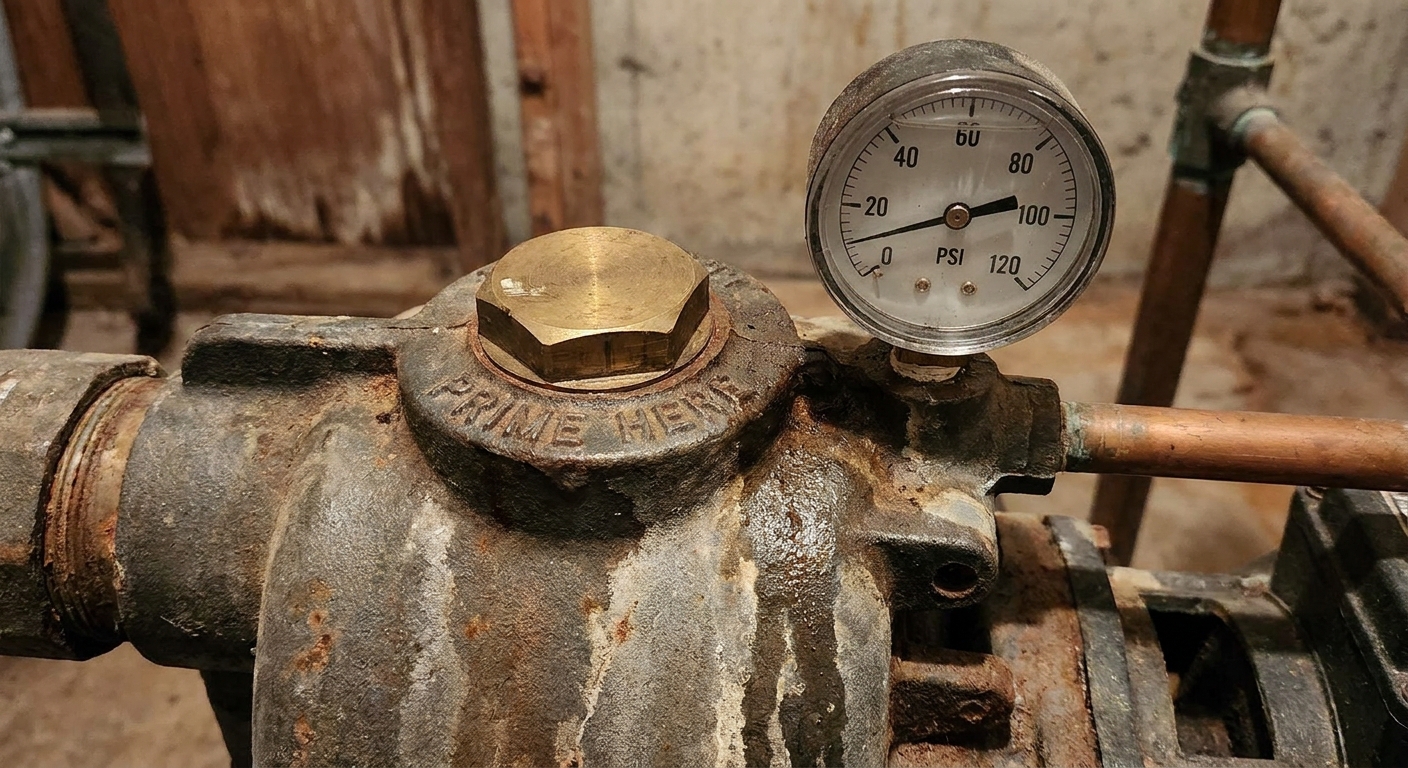
Step 3: Remove the priming plug
With the power still off, back the plug out slowly. You might get a little hiss or dribble if there is trapped pressure. That can be normal.
Step 4: Fill the pump housing completely
Pour clean water into the priming port until it stays full. Do not stop at “a little water.” You want it all the way to the brim.
- If the water level drops quickly and keeps dropping, that usually means the water is running down the suction pipe toward the well. Keep filling until it stabilizes.
- If you cannot keep it full at all, you may have a suction-side leak or a foot valve that is not holding. We will cover that below.
Step 5: Reinstall the priming plug
Wrap the plug threads with Teflon tape or apply pipe dope, then reinstall it. Tighten snugly. Over-tightening can crack pump castings or strip threads.
Step 6: Turn the power back on and watch the gauge
Restore power at the breaker. On many setups, you will see pressure start to climb within a minute or two. It can take longer depending on suction lift, pipe length, how much air is trapped, and how well the jet assembly is doing.
Protect the pump: If the gauge does not move at all after 2 to 3 minutes, shut it off, let it cool a bit, and reprime. Running dry is how seals get cooked.
Once pressure climbs steadily toward the cut-out setting, you are on the right track. (If you are not sure what that is, many homes are set up around 30/50 or 40/60, meaning the pump turns on at the lower number and shuts off at the higher one.)
Step 7: Bleed air once pressure starts rising
Once the gauge begins moving upward, go to the closest faucet or hose bib and open it partway. You will often get bursts of air, spitting, and milky water at first.
Let it run until the flow smooths out. Then close the faucet and let the pump finish building pressure and shut off normally.
Step 8: If it does not catch, repeat
If the pump runs but never builds pressure:
- Shut off power again.
- Remove the priming plug.
- Top the pump off again. Often the first run pushes air around and drops the water level inside the housing.
- Reinstall plug and try again.
Two priming cycles is common. Three is not unheard of after the system drained down.
A quick reality check on suction lift
If your pump is trying to lift water from too far down, priming can be a losing game. Shallow well jet pumps are typically happiest with a suction lift around 20 feet or less (even though the textbook maximum gets quoted higher). If your well level is deeper than that, a deep well jet or submersible is usually the better match.
If the well was opened or got dirty
If your priming water source was questionable or you opened the well cap and things got messy, treat that as a contamination risk. Use clean water for priming, and consider contacting a local well pro about proper disinfection and testing if you suspect anything got into the well.
If it loses prime again, stop and troubleshoot
If you prime it, it works, and then a few hours later or the next morning you are back to “motor runs, no water,” something is letting air in or letting water drain back. The usual culprits are suction leaks and a leaking foot valve (or check valve).
Check for suction leaks
On a shallow well jet pump, the suction side is under vacuum when the pump runs. That means it might not leak water outward. Instead, it can pull air inward through tiny gaps you will never notice otherwise.
What to inspect
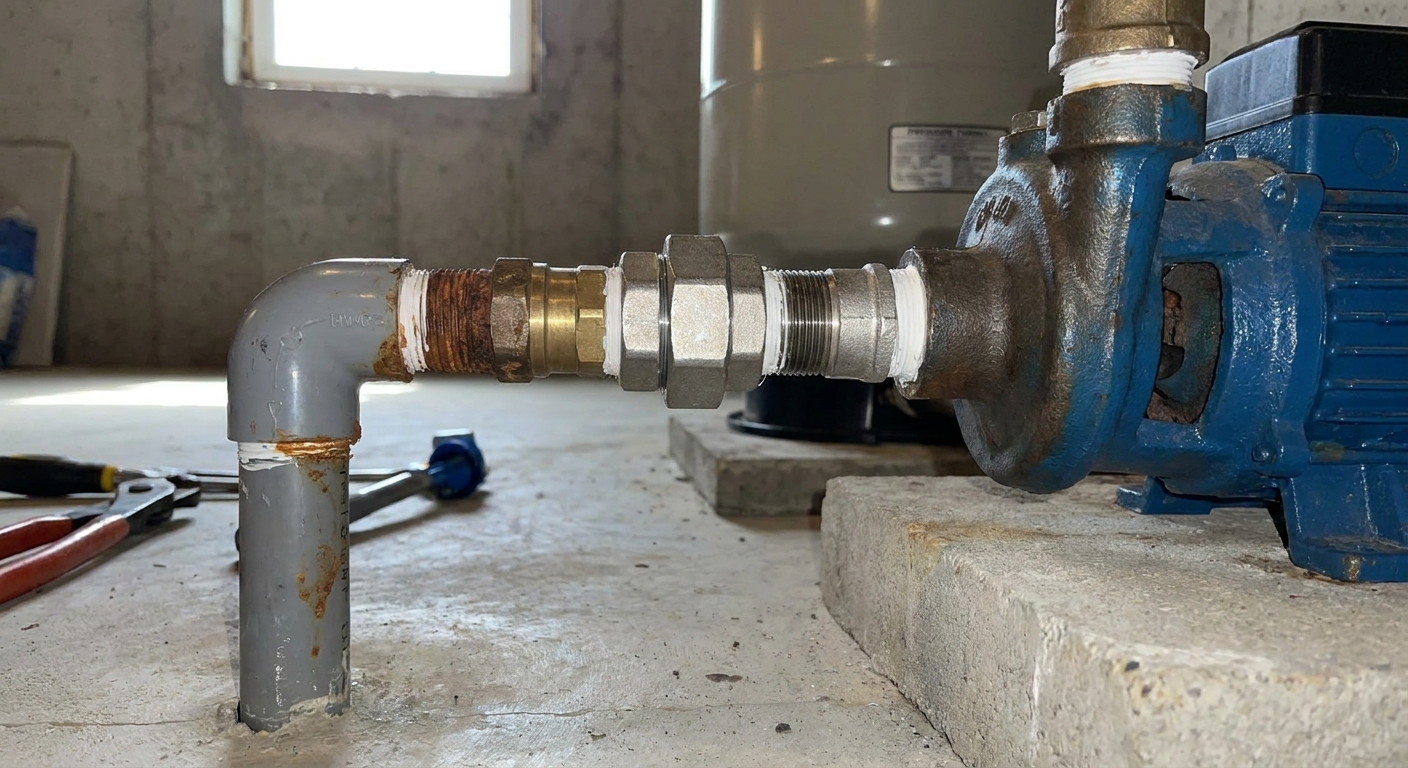
- All threaded joints on the suction line, especially near the pump inlet
- Hose clamps if any flexible suction hose is used (tighten or replace)
- Union fittings and their O-rings
- Cracked fittings (PVC can hairline crack from age or over-tightening)
- Pump drain plug and priming plug threads
Easy DIY clues
- Soapy water (while running): Brush soapy water on suspect joints. If you see it get sucked in or dimple repeatedly, you may be pulling air there.
- Plastic wrap trick: Wrap plastic wrap around a suspect joint while the pump runs. If it gets pulled tight, that joint is a good suspect.
These tests are clues, not courtroom proof. The most reliable fix is still the boring one: re-seal the suspect joints, replace bad clamps, and swap cracked fittings.
Fix: Disassemble the leaking joint, clean threads, reapply Teflon tape or pipe dope (use a sealant rated for potable water), then reassemble. On PVC, do not over-tighten. Snug plus a bit is usually enough.
Check the foot valve or check valve
Most shallow well setups rely on a foot valve at the end of the suction pipe down in the well. Its job is to hold water in the suction line when the pump shuts off. If it leaks, the water drains back down the well and your pump loses prime.
Signs it is not holding
- Pump primes and runs fine, but after sitting overnight it is air-bound again.
- It takes longer and longer to build pressure each day.
- You might hear water rushing back when the pump shuts off, but many wells are quiet, so not hearing it does not rule anything out.
A simple gauge check
After the pump runs and shuts off normally:
- Note the pressure on the gauge.
- Do not use water.
- Watch the gauge for 15 to 30 minutes.
If pressure falls steadily with no water use, you could have:
- A leak in house plumbing, or
- A leaking check valve or foot valve letting water drain back
To narrow it down, many systems have a shutoff valve right at the pump discharge (heading to the tank or house). If you close that valve after the pump shuts off and the pressure still falls, the issue is more likely on the pump or well side.
Caveat from the real world: some systems have a check valve between the pump and the tank or house (or built into a tank tee). Depending on where that check valve sits, closing the discharge valve may not isolate the system the way you expect. If your plumbing has extra check valves, pay attention to where they are in the lineup.
Fix: A bad foot valve usually means pulling the suction line and replacing the valve and often the screen. If that is new territory for you or your well is deep or awkward, this is a good point to call a well pro.
Other issues that look like lost prime
1) Low well water level
If the water table drops seasonally, the pump may suck air because the well cannot keep up. You might see good water for a minute, then it fades to air.
Signs include sandy water, sputtering during heavy use, and a pump that recovers after sitting a while.
2) Clogged jet or venturi
Mineral scale, sand, or debris can reduce the pump’s ability to create suction. If you have to prime more and more often, or flow is weak even when it is “working,” a clog may be in play.
3) Worn impeller or bad seal
If the pump has been run dry repeatedly, internal parts can be damaged. You can sometimes prime all day and it never truly catches.
4) Pressure builds but the pump short-cycles
If the pump builds pressure but turns on and off rapidly during water use, that is usually not a priming issue. Common causes are a waterlogged pressure tank, a ruptured bladder, or the tank air charge being off.
I will keep it simple: if you tap the tank and it sounds “solid” all the way up, or the pressure swings wildly with a small amount of water use, put the pressure tank on your suspect list.
Common questions
How long should I let a jet pump run while trying to prime?
Not long. If it is not building pressure within a couple minutes, shut it down, let it cool, and reprime. Running dry overheats the seal and can ruin the pump.
Do I prime through the pressure gauge port?
Usually no. Prime through the priming plug on top of the pump housing. If your pump lacks a dedicated priming port, check the manual for the intended fill point.
Should I open a faucet while priming?
Start with faucets closed so pressure can build. Once the gauge starts climbing, open a faucet briefly to bleed air and clear milky water. If your system has a vent screw at the pump, that can also help purge air once the housing is full.
Why does the water look cloudy after priming?
That is usually just air mixed in the water. It should clear after a short run. If it stays cloudy or gritty, you could be pulling sediment, which points to a well issue or intake problem.
When to call a pro
I’m all for DIY, but wells can get expensive fast when you guess wrong. Call a pro if:
- You have primed repeatedly and it never builds pressure.
- You suspect the well water level is dropping or you are pulling sand.
- You need to pull the well line and you are not set up to do it safely.
- Any electrical components are wet, burnt, or tripping breakers.
The 30-Second Cheat Sheet
Essential takeaways for: Jet Well Pump Lost Prime? How to Reprime It
Fast fix: reprime a shallow well jet pump
- This is for: a jet pump that runs but pumps no water. If the pump never starts, use our Well Pump Won’t Turn On? What to Check First page instead.
- Confirm pump type: This applies to an above-ground shallow well jet pump (usually a single suction pipe going to the well). Deep-well jet and submersible setups are different animals.
- Kill power at the breaker before opening the priming port.
- Close faucets to start so the pump can build pressure. (After pressure starts rising, crack a faucet open to bleed air.)
- Remove the priming plug on top of the pump housing.
- Fill with clean water until the port stays completely full.
- Reinstall priming plug with Teflon tape or pipe dope, snug tight.
- Restore power. Watch the gauge. You will often see pressure start to climb within a minute or two.
- If the gauge does not move at all after 2 to 3 minutes, shut it down to avoid damage, then top off and retry (2 to 3 cycles is common).
- Once pressure starts rising, open a faucet briefly to bleed air until flow smooths out.
If it keeps losing prime
- Suction leak: Tighten clamps, reseal threaded fittings, check unions and plug threads. Suction leaks often pull air in without leaking water out.
- Bad foot valve or check valve: Pump works after priming but is air-bound again after sitting. Pressure may fall with no water use.
- Do not run dry for long. Dry-running can damage seals and impellers.
💡 Tip: Scroll up to read the full article for detailed, step-by-step instructions.
⬆️ Back to top
About Grit
Content Creator @ Grit & Home
Grit is Grit & Home’s little blue clay courier, delivering big questions about the place you call home. Expect practical ideas, a raised eyebrow, and a satchel full of curiosity.