
🚨 In a DIY emergency or rush?
Skip the details and jump straight to our 30-second cheat sheet for the most crucial info.
Small courier. Big home questions.
If you have tiny flies in the kitchen and they keep showing up no matter how many times you scrub the sink, bleach the drain, or deploy the enzyme gel, I have a raised eyebrow for you: you might not have a cleaning problem. You might have a plumbing problem.
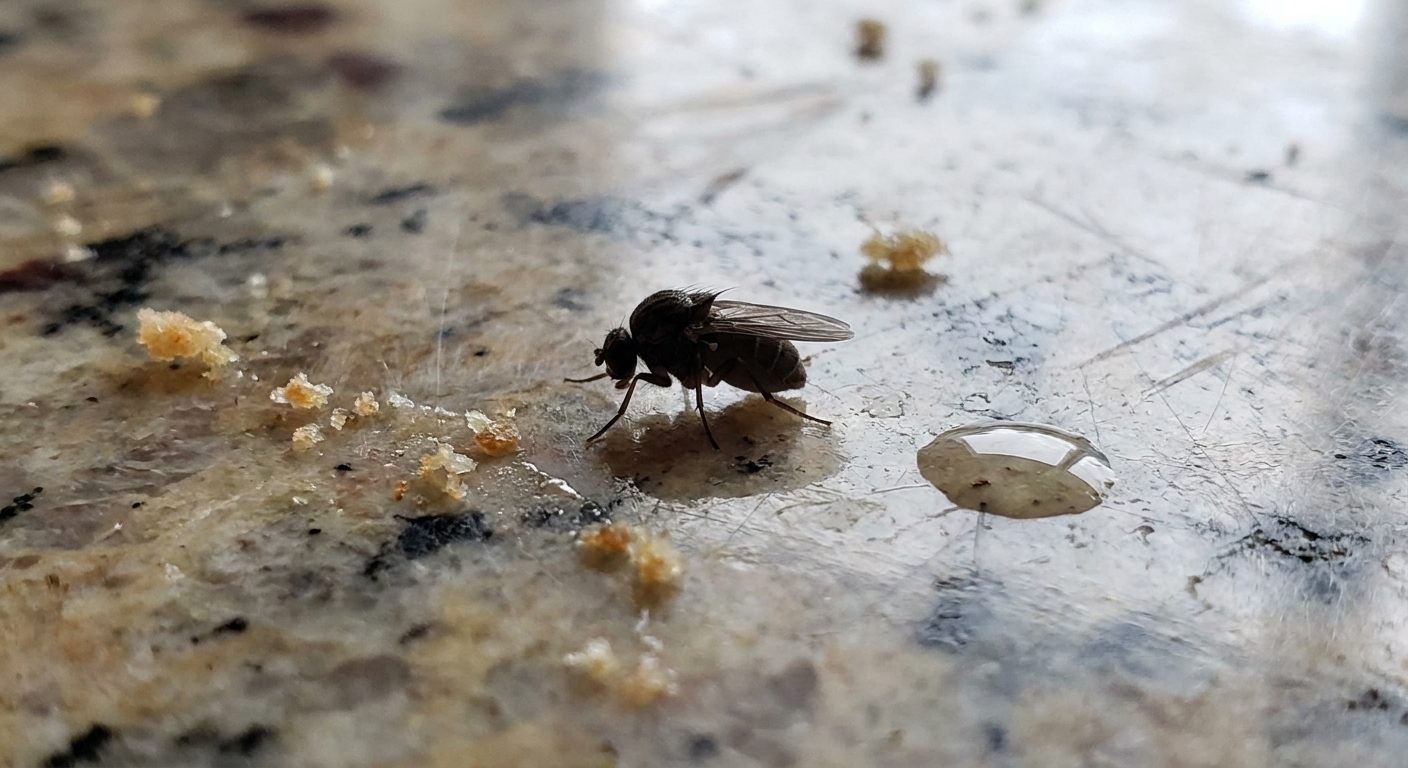
One clue changes the whole plot. Drain flies tend to hang out right around drains. Phorid flies, on the other hand, often run across your counters like they own the place.
First, confirm the fly
Phorid flies, also called humpbacked flies or scuttle flies, are small and easy to mistake for fruit flies or drain (moth) flies. Behavior helps a lot, but it is not the only clue.
Quick ID: what to look for
- They run more than they fly. You will often see them scurrying across counters, backsplashes, and along the sink rim, then taking short, awkward flights.
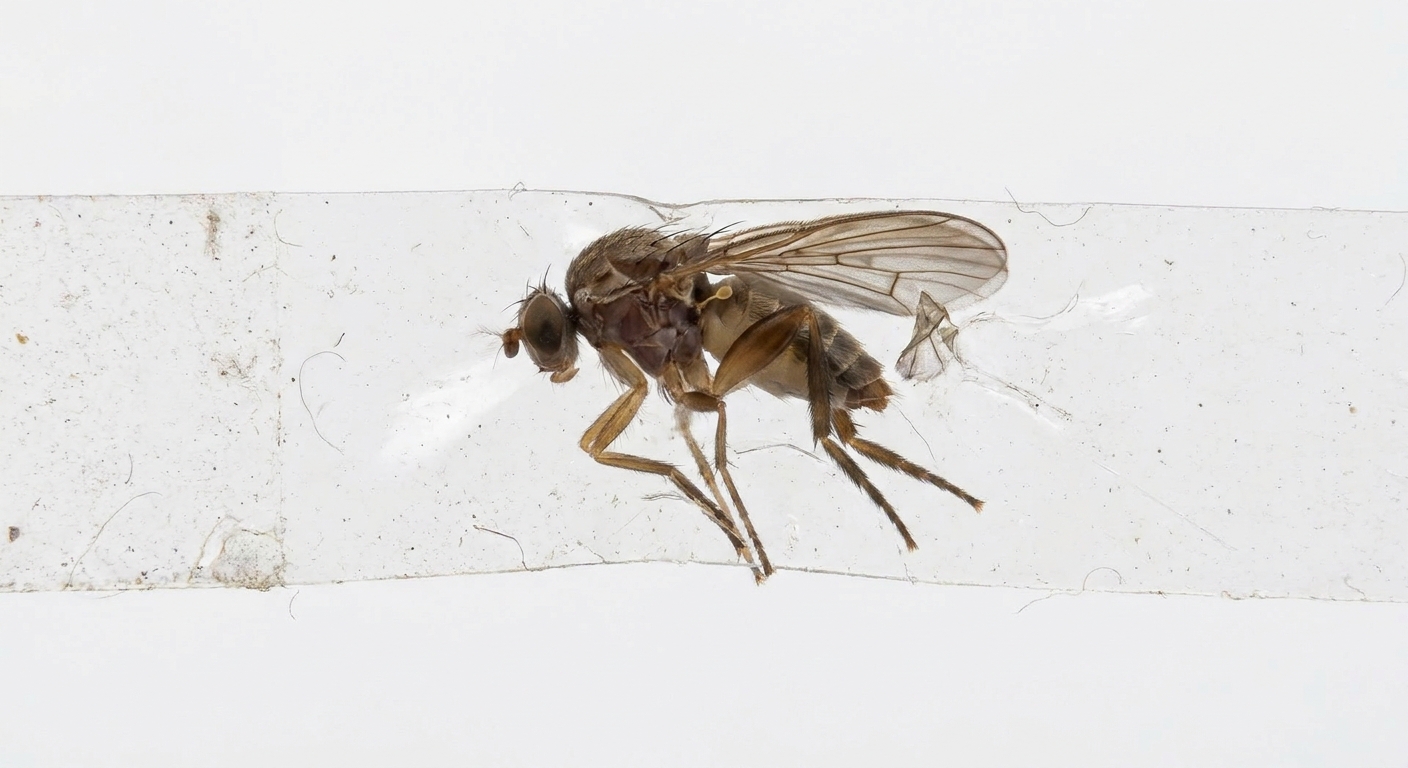
- Humpbacked profile. From the side, the thorax looks arched, giving them a little camel-hump silhouette.
- Small, dark, not fuzzy. Often tan to dark brown or black. Not the fuzzy, moth-like look of classic drain flies.
- Fruit fly check. Fruit flies usually hover near produce, recycling, or sticky spills. Under bright light, many have noticeably red eyes.
- Drain fly check. Drain (moth) flies are typically fuzzy and like to rest on nearby walls and surfaces, especially close to the drain area.
If you can, trap one on clear tape and look at it from the side under bright light. You are looking for that arched back and the overall “scuttle” vibe.
Why drain cleaning may do nothing
There are a few very different fly problems that get treated the same way online: pour something down the drain and hope for magic.
When cleaning works
If the flies are breeding in biofilm inside a fixture drain, a deep clean can help. That is common with drain flies. It can also be true for phorid flies if the breeding site is a neglected floor drain, a seldom-used bar sink, a gunked-up overflow channel, or a disposal splash guard that has seen some things.
When cleaning fails
If phorid flies are breeding in sewage from a cracked drain pipe, failed connection, or damaged sewer line, you can polish the sink until it shines and they will still pop up. The reason is simple: the nursery is not in the sink. It is downstream, or under/around the system.
Under a slab, a leaking drain line can keep surrounding soil damp and organic. That can support larvae. Adults then travel up through wall voids, cabinet penetrations, gaps around pipes, and sometimes right through the sink cabinet like they paid rent.
What else phorids breed in
Phorid flies are not picky. A sewer or drain leak is one stubborn source, but it is not the only one. Before you assume the worst, widen the search for hidden, smelly, organic “snacks,” including:
- Trash and recycling residue (especially cans, bottles, and sticky bins)
- Compost containers or a forgotten bag of food scraps
- Rotting onions or potatoes in a cabinet or pantry corner
- Mop heads, mop buckets, and damp rags stored in a dark spot
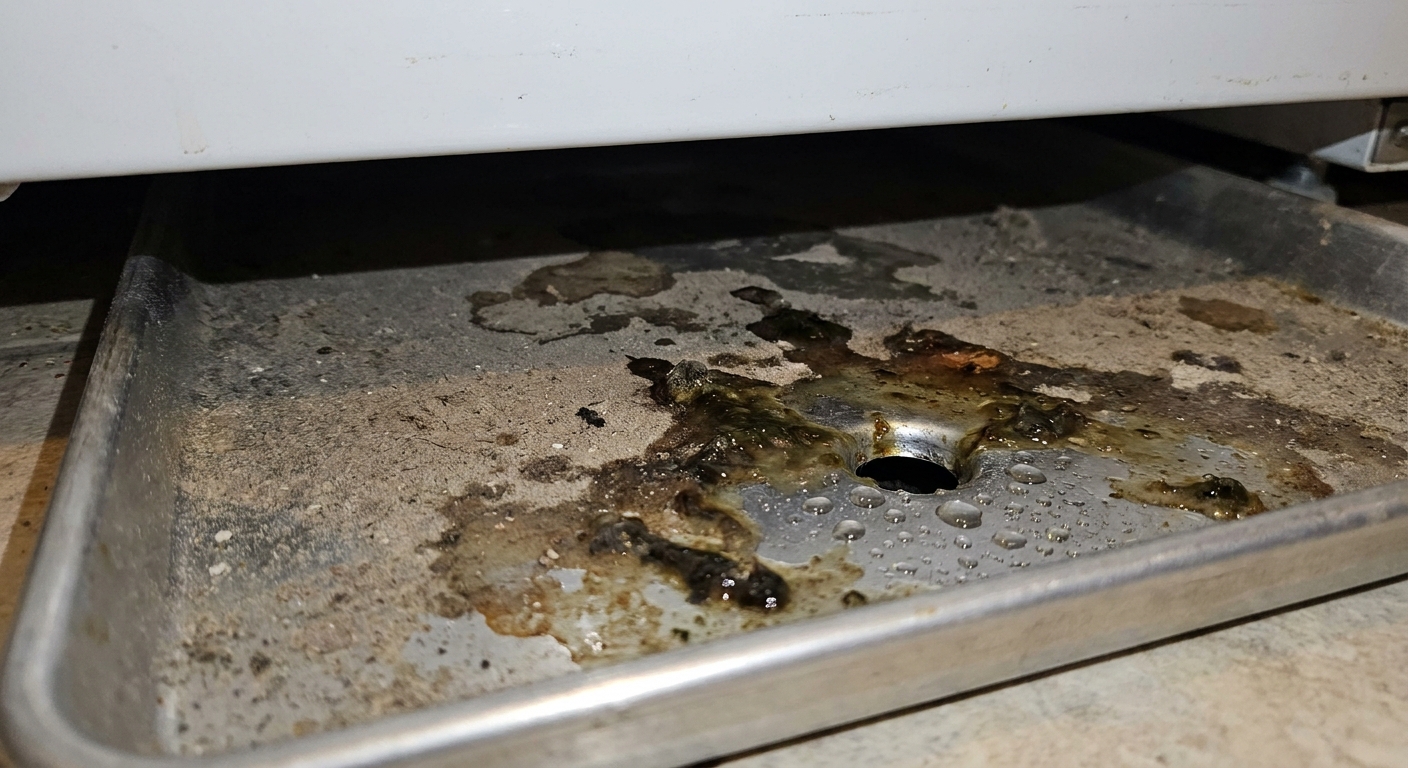
- Refrigerator drip pans (or gunk under/behind the fridge)
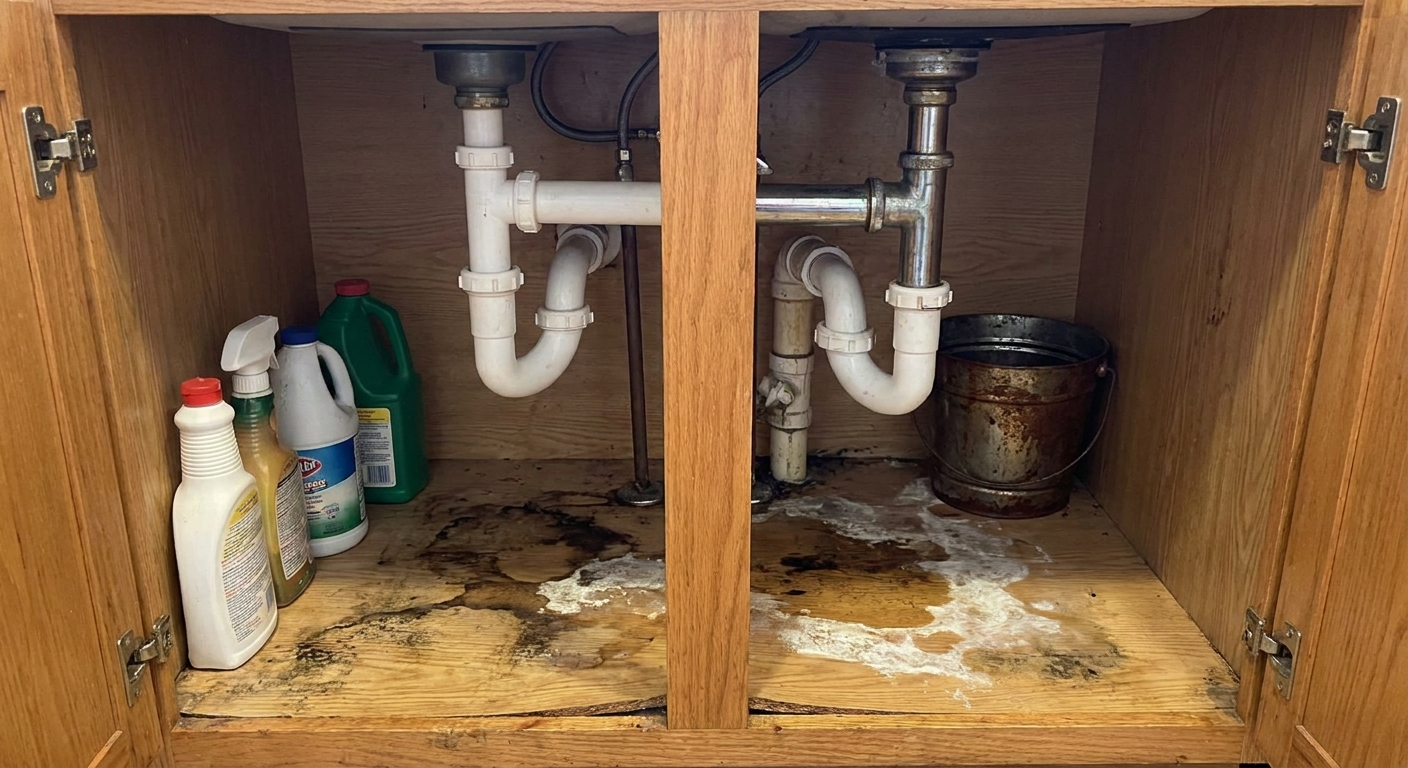
- Hidden leaks under the sink, dishwasher, or an adjacent supply line
- Dead rodents or other organic decay in wall voids (gross, but real)
Same fly, different origin story. The goal is to find the breeding site, not just the spot where the adults are showing off.
Phorids can point to plumbing
Now the part nobody wants to read: in homes, one of the most stubborn sources can be sewage from a compromised drain line. A broken or leaking line does not always announce itself with a dramatic puddle. Sometimes the most obvious symptom is a steady supply of scuttling flies that ignore your best cleaning efforts.
What you can check today
Before you jump to “broken sewer line,” do a quick, practical sweep for the easier stuff. You are looking for moisture, odor, and hidden organic buildup.
1) Rule out fruit flies
- Remove produce from the counter for 48 hours or seal it in the fridge.
- Empty and rinse recycling, especially cans and bottles.
- Wipe under small appliances where sticky spills hide.
2) Hit the forgotten gunk zones
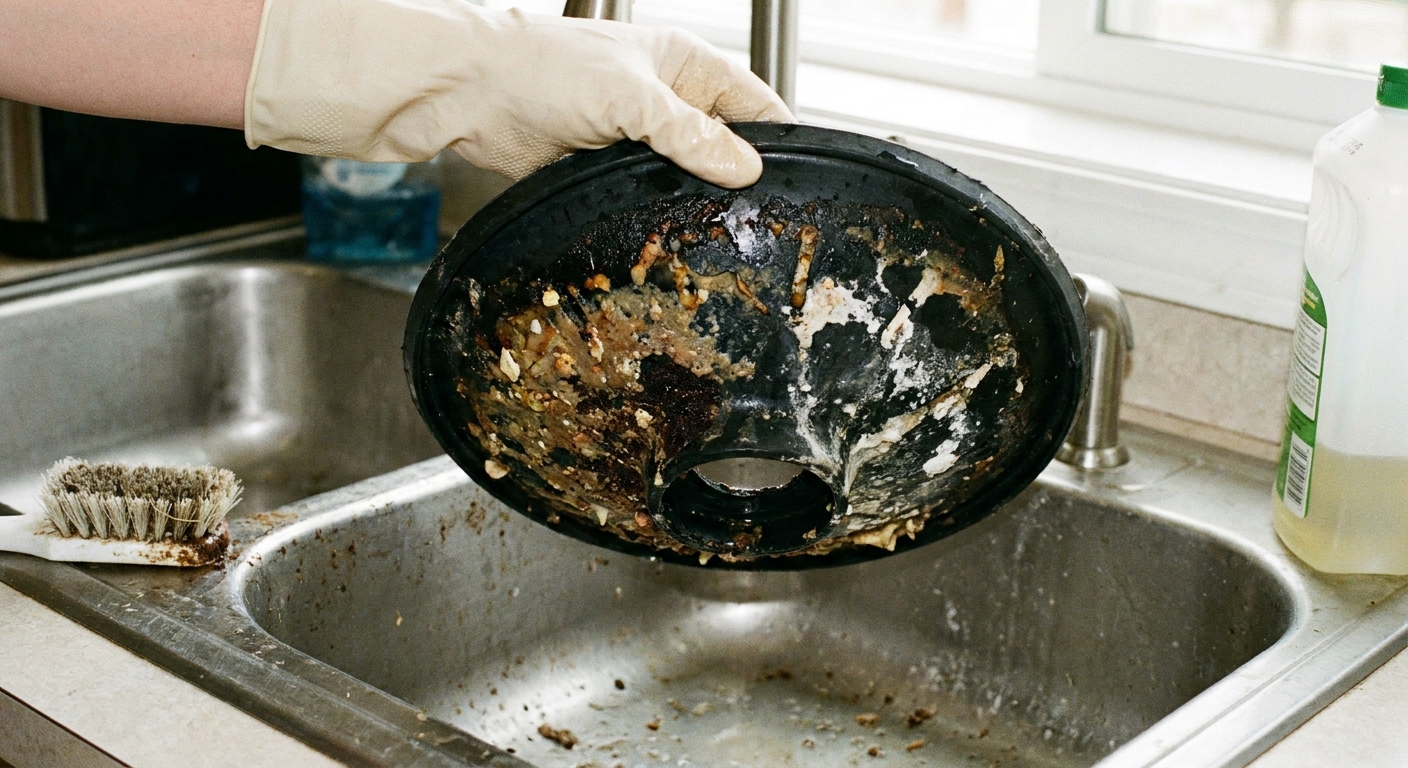
- Garbage disposal splash guard (the rubber flap). Pull it out if removable and scrub both sides.
- Sink overflow (if you have one). That channel can hold grime and water.
- Dishwasher connection at the disposal or drain inlet. Look for seepage and sludge.
- Floor drains in nearby laundry rooms or basements. A dry trap can let odor and insects travel.
3) Try an overnight drain cover test
This is a heuristic, not a verdict, but it can be useful. At night, cover the drain opening with clear tape or plastic wrap sealed at the edges. If the next morning you have flies above that cover, the drain is a suspect. If flies still show up from cabinet gaps, baseboards, or other areas, the source may be elsewhere.
4) Do a tape test to find the exit point
Phorids often emerge from specific gaps. At night, place strips of clear tape sticky-side out near likely spots, like:
- Along the back seam of the countertop behind the sink
- Inside the sink base cabinet near pipe penetrations
- Near a wall where plumbing enters the cabinet
If you catch multiple flies in one location consistently, that area is giving you a directional arrow. It does not prove a sewer break, but it helps target where a pro should look.
The big clue: where they gather
With biofilm breeders, you usually see activity right at the drain opening or hovering close by. With leaks, wall voids, or hidden organic sources, you often see flies:
- Appearing from under the sink cabinet, not the sink bowl
- Showing up along baseboards or at the toe-kick
- Concentrating near one area of the kitchen even when food is removed
- Returning quickly after cleaning, like nothing happened
And then there is the unglamorous but important detail: odor. Persistent musty, sewage, or sulfur-like smells near the kitchen can be part of the same story. Just remember: odor is a clue, not proof. A dry P-trap, a disposal full of bacterial funk, or a venting issue can also smell impressive.
When to call a plumber
Here is the line in the sand. If you have done basic sanitation and targeted sink cleaning and you still have scuttling flies, keep your money for diagnostics instead of another bottle of treatment.
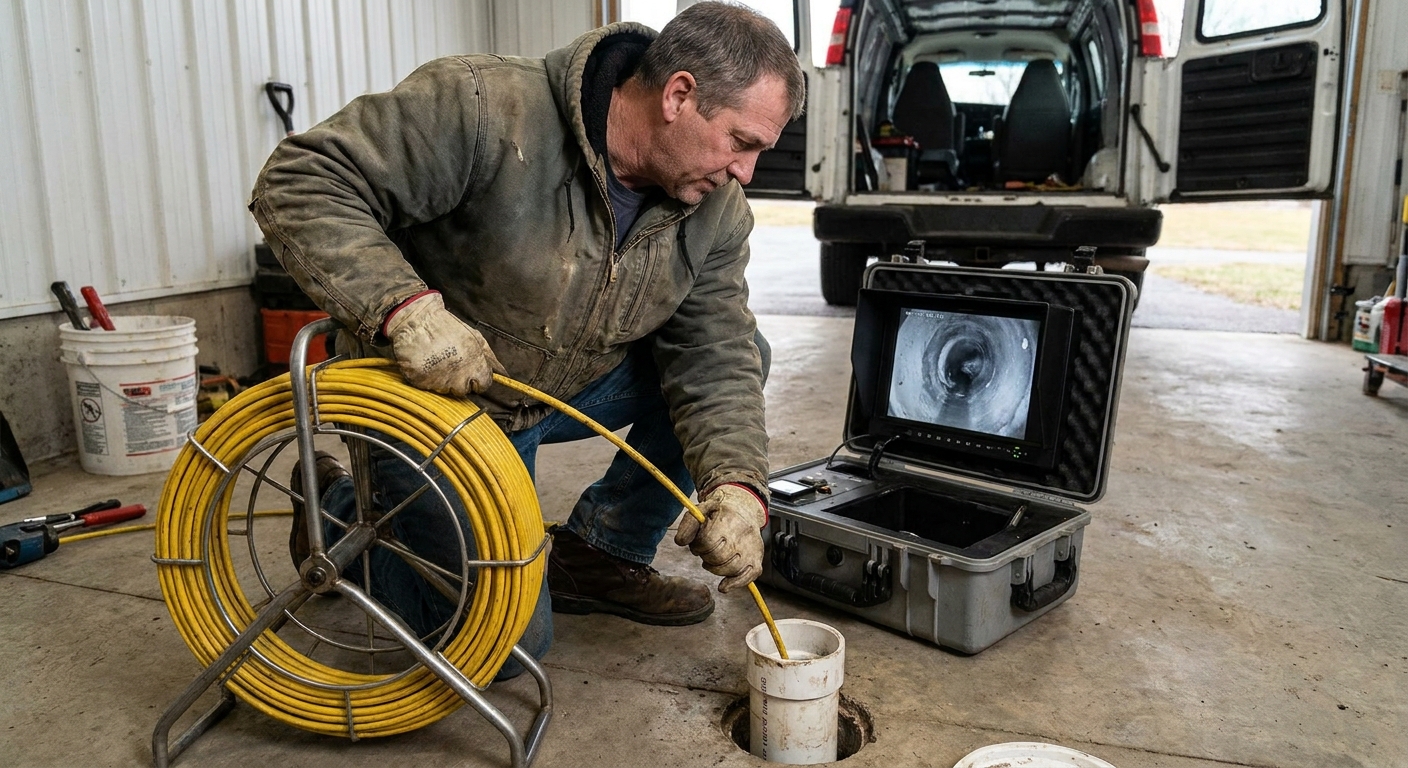
Ask about a camera inspection if you notice:
- Phorid behavior: humpbacked flies that often run across counters, walls, or inside cabinets
- Repeat infestations that return within days of cleaning and treating the drain
- Sewage or sulfur-like smells near the kitchen, especially if they come and go
- Unexplained moisture in the sink base cabinet, warped cabinet floor, or dampness at the toe-kick
- Slow drains or gurgling in the kitchen sink, dishwasher, or nearby fixtures
- Multiple fixtures acting weird at once, like backups or bubbling in a different sink when the dishwasher drains
- Flies appearing from gaps around plumbing penetrations or along baseboards
A camera inspection can help confirm whether a drain line is cracked, separated, bellying, or leaking at a fitting. If there is damage under a slab, finding it early can mean a smaller repair footprint and less time living with the smell and the scuttle squad.
Safety note on sewage smells
If the sewage smell is strong or persistent, ventilate the space and avoid lingering in the area while you troubleshoot. Sewer gas can be hazardous. If you feel unwell, step out and call a pro promptly.
What not to do
- Do not mix drain chemicals. Bleach and other cleaners can create dangerous fumes when combined. If you used something already, flush with plenty of water and pause before adding anything else.
- Do not keep pouring harsh chemicals down the drain hoping for a miracle. They often do not penetrate biofilm well, can damage plumbing, and still miss the source if the problem is downstream.
- Do not assume “no clog” means “no leak.” Drain lines can leak and still drain.
- Do not ignore odor. Odor is data. Write down when it happens and where it is strongest.
Will they stop right away?
Usually, fixing the moisture and organic source is the turning point, but you may still see adult flies for a bit. Adults can linger while remaining larvae finish their cycle. Your goal is to remove the breeding site. Once that is gone, the population collapses instead of rebounding.
While repairs are in progress, sticky traps placed where you have seen them run can reduce the annoying adults and confirm whether the numbers are dropping.
Bottom line
If the flies in your kitchen often run, show a humpbacked profile, and seem totally unimpressed by sink cleanouts, it is time to widen the search. Sometimes the answer is gunk. Sometimes it is trash juice. Sometimes it is a hidden leak. And yes, sometimes it is sewage under a slab.
When the signs point to plumbing, the next “treatment” is not another enzyme bottle. It is a plumber, a camera, and a clear answer.
The 30-Second Cheat Sheet
Essential takeaways for: Phorid Flies in the Kitchen? Check for a Broken Sewer Line
Fast ID
- Phorid flies are small and often dark with a humpbacked profile.
- The big tell is behavior: they often run across counters and cabinets more than they fly.
- Drain (moth) flies are typically fuzzy and like to rest on nearby walls. Their wings often look broader and moth-like.
- Fruit flies often hang around produce, recycling, or sticky spills, and many species show noticeably red eyes under bright light.
Why drain cleaning may not work
- If they are breeding in sewage from a cracked drain or sewer line, scrubbing the sink and pouring enzyme gels will not stop them.
- They can also breed in hidden organic sources like trash residue, compost, mop heads, refrigerator drip pans, or a dead rodent in a wall void.
- They can emerge through gaps around pipes, cabinets, and baseboards even if the sink looks clean.
Quick checks (before you call)
- Remove or seal produce for 48 hours and clean recycling to rule out fruit flies.
- Scrub the garbage disposal splash guard and check the sink overflow area if you have one.
- Look for odor or dampness inside the sink cabinet and at the toe-kick.
- Try an overnight drain cover test: cover the drain opening with clear tape or plastic wrap. If flies still appear elsewhere, the source is likely not that drain.
Stop buying treatments and call a plumber if:
- You see running, humpbacked flies that return within days of cleaning.
- There is a sewage or sulfur smell near the kitchen.
- You have slow drains, gurgling, or recurring backups.
- You find unexplained moisture in or under the cabinet.
What to ask for
- A camera inspection of the kitchen drain line and main line, plus a leak check under the sink and around nearby fixtures if symptoms fit.
💡 Tip: Scroll up to read the full article for detailed, step-by-step instructions.
⬆️ Back to top
About Grit
Content Creator @ Grit & Home
Grit is Grit & Home’s little blue clay courier, delivering big questions about the place you call home. Expect practical ideas, a raised eyebrow, and a satchel full of curiosity.