
🚨 In a DIY emergency or rush?
Skip the details and jump straight to our 30-second cheat sheet for the most crucial info.
When a well pump will not shut off, it is usually not a mystery. In a standard pressure-switch system, it is the system telling you one simple thing: it cannot hit its cut-out pressure, so the pressure switch never says, “OK, we are done.”
I learned this the hard way when our pump ran for what felt like forever after a shower. I kept thinking, “It is just catching up.” What it was really doing was heating itself up and chewing through its own life span while I ignored the warning signs.
This guide stays focused on the continuous-run problem for the common setup: a pressure tank controlled by a pressure switch. If your pump is clicking on and off rapidly, will not start at all, or your flow is weak while you are actively using water, those are different failures with different checks.
Quick note: If you have a constant-pressure system (VFD, constant-pressure valve, pump controller box with a digital display), the “rules” and diagnostics can be different. The safe steps in this guide still help you spot leaks and obvious control problems, but consult your controller manual or installer if the system is not a classic pressure switch and tank setup.
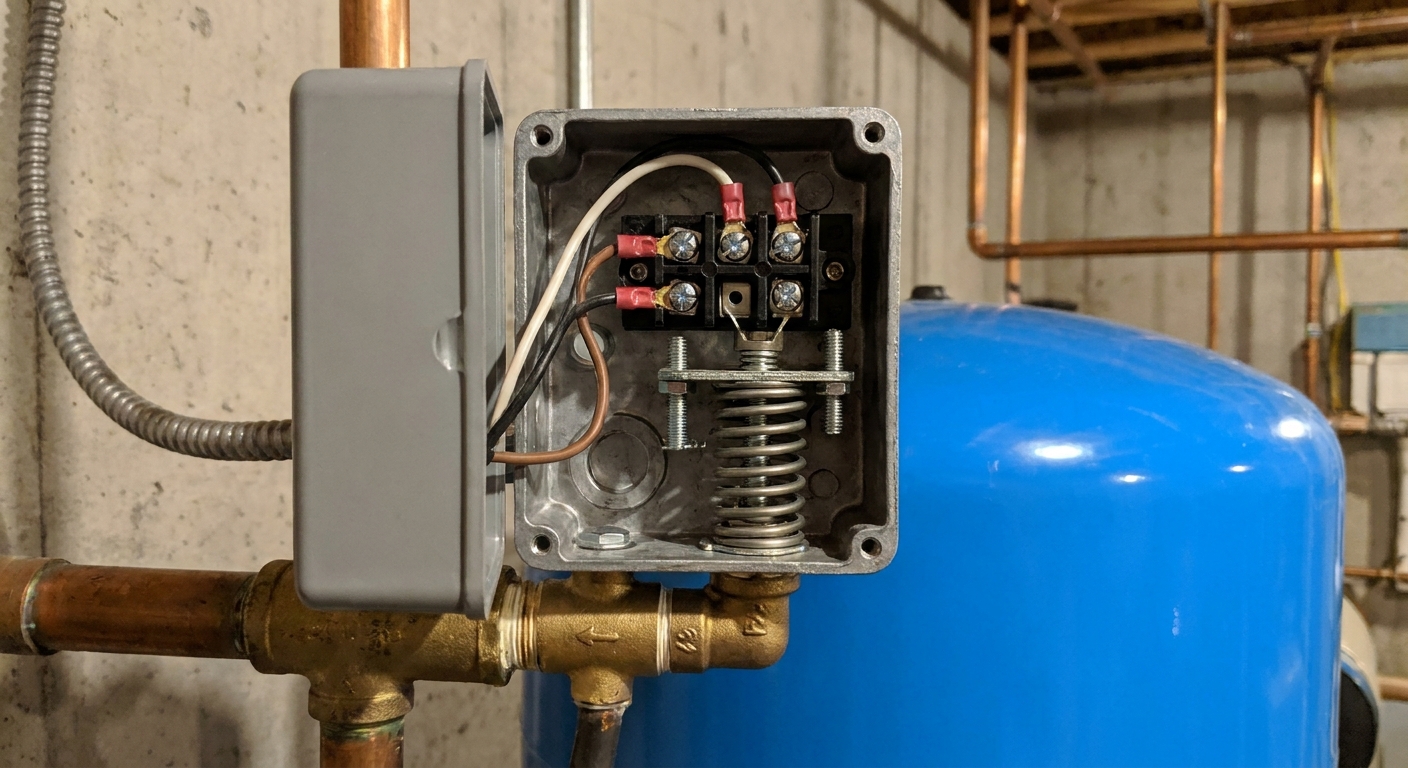
What “won’t shut off” means
Most private well systems are controlled by a pressure switch and a pressure tank. The switch has two setpoints:
- Cut-in: the pressure where the pump turns on (often 30 or 40 psi)
- Cut-out: the pressure where the pump turns off (often 50 or 60 psi)
If the pump runs continuously, one of these is happening:
- The pressure never reaches cut-out because water is leaving the system (a leak or constant demand) or the pump cannot keep up.
- The switch or its electrical control is stuck closed (contacts welded, relay/controller stuck, miswiring), so it keeps feeding power to the pump even when pressure is high.
- The system cannot accurately sense pressure due to a bad gauge, a clogged switch sensing port, or a plugged tank tee connection, so it keeps calling for more.
Safety first
A pump that runs too long can overheat, damage the pump, and in some cases damage wiring or controls. Before you start troubleshooting:
- Know where to shut off power: locate the well pump breaker (or disconnect) and label it if it is not already labeled.
- Do not touch exposed wiring inside the pressure switch box unless power is off and you are comfortable verifying it is off.
- Do not “baby it” for days: if the pump will not shut off, limit water use and get through the checks promptly.
If you smell burning, see smoke, hear loud buzzing at the switch, or suspect anything is overheating, shut it down at the breaker and call a well pro.
If you are tempted to “see how hot it is,” do not put your hand on the motor, piping, or control box. Hot components can burn you. When in doubt, shut it off and get help.
Tools that help
- Flashlight
- Paper towels or dry rag
- Adjustable wrench or channel-lock pliers
- Small bucket
- Phone timer or stopwatch
- Tire pressure gauge (for checking the pressure tank air charge)
- Multimeter (optional, only if you know how to use it safely)
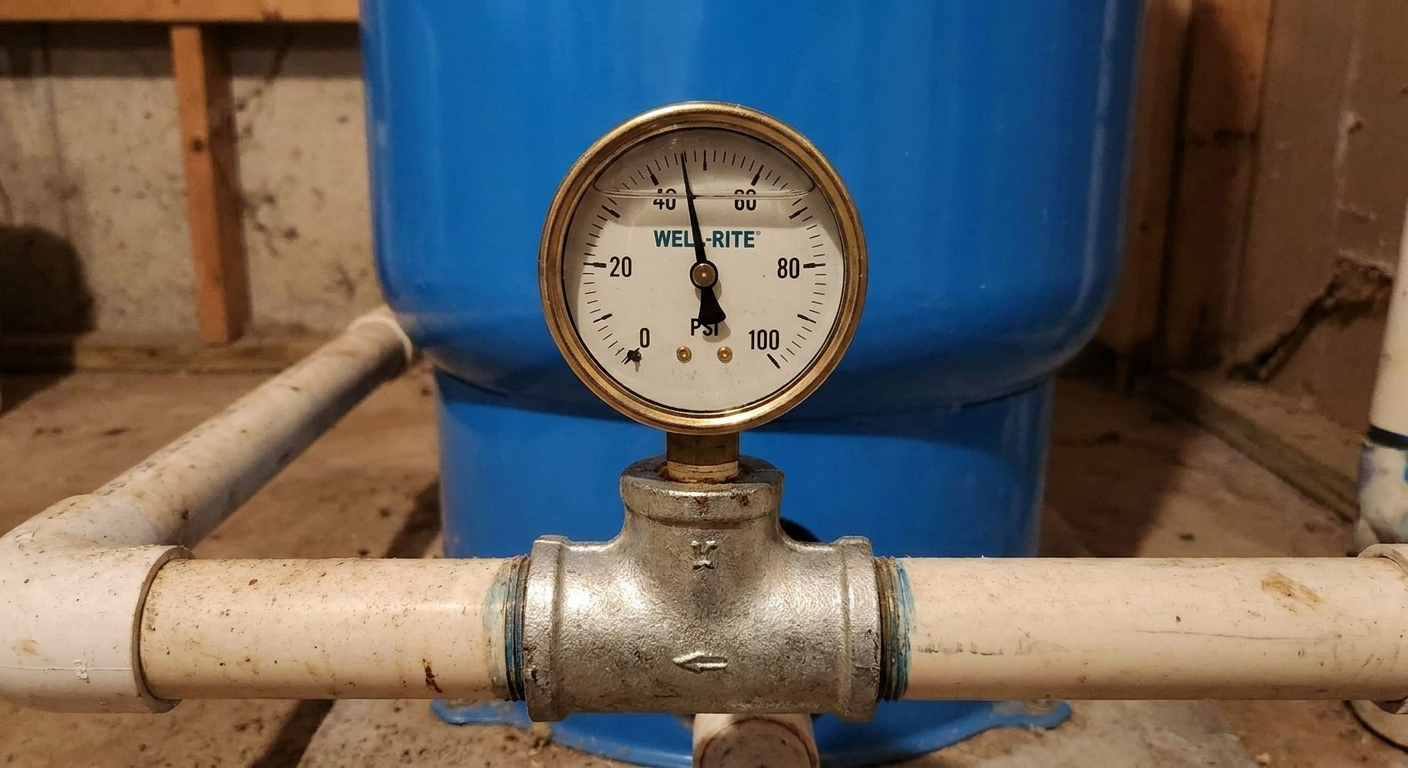
Step 1: Watch the gauge
Go to your pressure tank setup and find the pressure gauge. With all fixtures off and no appliances running (dishwasher, washing machine, ice maker fill, irrigation, livestock waterers), watch the gauge for 2 to 3 minutes while the pump is running.
What the gauge tells you
- Pressure climbs but stalls below cut-out (example: it rises to 42 psi and sits there): you likely have a leak/constant demand, a pump that cannot build enough pressure, a well supply issue, or a restriction upstream of the pressure switch and tank.
- Pressure barely moves (example: stuck around 10 to 20 psi): bigger issue like a major leak, failing pump, blocked intake, bad check valve, or the well is running out of water.
- Gauge reads something odd (example: stuck at one number, jumps around wildly, fogged face): the gauge may be bad, and you might be troubleshooting a ghost.
Quick reality check: Pressure gauges are cheap and fail more often than most homeowners think. If yours is fogged, corroded, or stuck, replace it or have it replaced. Otherwise you are diagnosing blind.
Step 2: Rule out hidden water use
Before you assume something is broken, make sure the system is not doing exactly what it is supposed to do.
- Make sure no toilets are running. A flapper that leaks quietly can keep a pump running longer than you would expect.
- Check for humidifier lines, irrigation, livestock waterers, hose bibs, and any “always on” appliances like treatment backwash cycles.
- If you have a water softener or filter system, confirm it is not stuck in regeneration or bleeding to drain.
If you shut off everything you can and the pump still will not reach cut-out, move to isolation checks.
Step 3: Do an isolation test
This is the most helpful homeowner-friendly test I know because it tells you which direction to look.
How to do it
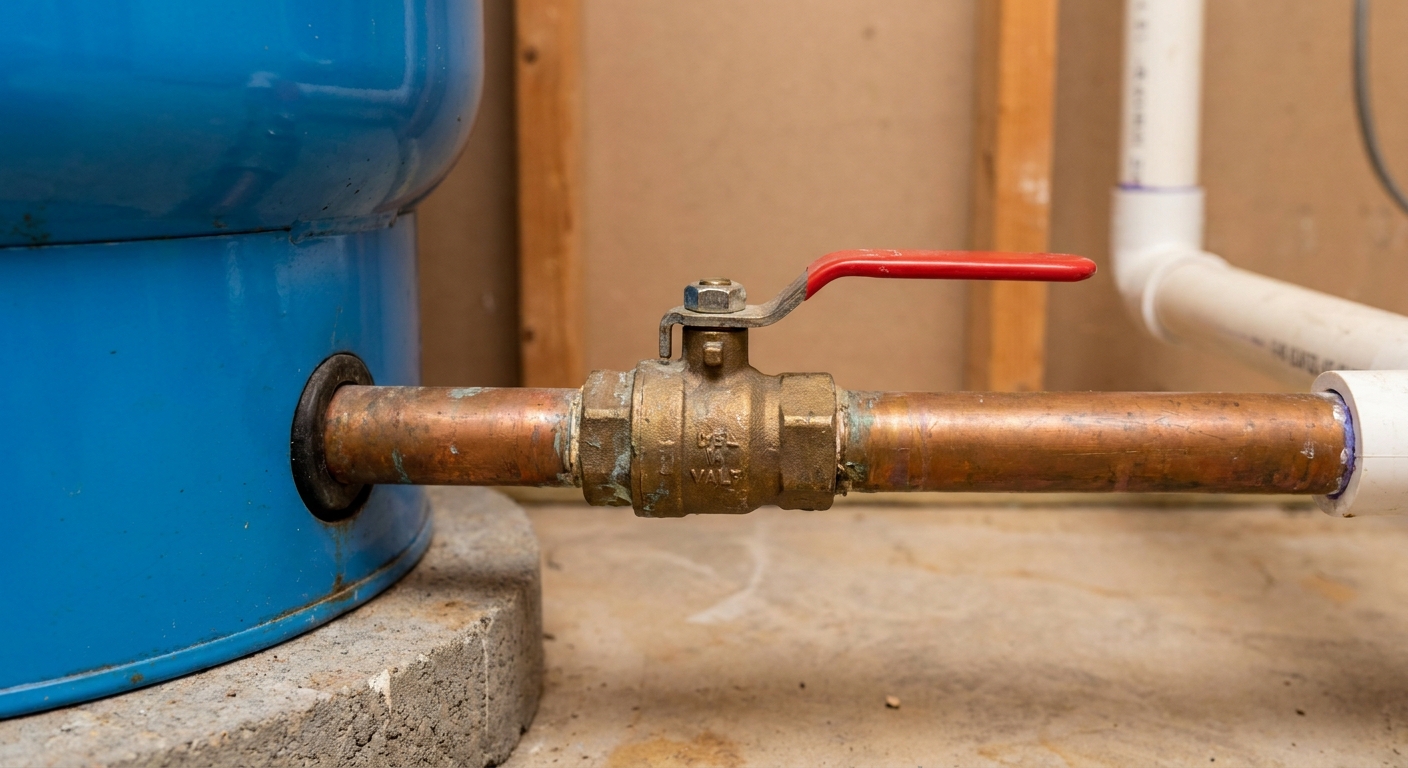
Look for a main shutoff valve on the line leaving the pressure tank toward the house. Many setups have a ball valve right near the tank tee.
- With the pump running and no water being used, close the valve to the house.
- Watch the pressure gauge for the next one to two minutes.
What the result means
- If pressure climbs to cut-out and the pump shuts off: the well and pump can build pressure. The problem is likely a leak or constant demand on the house side (plumbing leak, toilet, softener, underground yard line, etc.).
- If pressure still will not climb to cut-out: the issue is likely on the well side (pump, well, check valve, restriction upstream of the tank/switch, or pressure switch sensing issue).
Important: Do not leave the house valve closed and walk away if you have equipment that needs water flow for cooling or regeneration. This is a short test, not a new operating mode.
If you do not have a house shutoff
Some systems simply do not have a convenient valve near the tank. If that is your situation, you can still learn something by temporarily shutting off obvious branches (water heater cold feed, softener inlet or bypass, outside hydrant supply) to see if the pump behavior changes. It is not as clean as a true isolation valve, but it can help you narrow down where water might be going.
Cause 1: Bad or stuck pressure switch
The pressure switch is a spring-loaded electrical control that senses water pressure and opens or closes contacts. If contacts weld shut, the mechanism sticks, or a related relay/control box sticks, the pump can run continuously.
Safe homeowner checks
- Listen for clicking: when pressure rises and hits cut-out, you normally hear a distinct click as the switch opens. If pressure reaches cut-out but there is no click, the switch may be stuck closed or not sensing correctly.
- Check for obvious damage: with power off, remove the cover and look for burn marks, melted plastic, heavy corrosion, insects, or loose wires. If you see heat damage, stop and call a pro.
- Tap test: with the cover on (and hands clear of wiring), a light tap on the housing sometimes frees a sticky mechanism. If that changes behavior, the switch is on borrowed time and should be replaced.
Do not adjust the switch as a first step. Cranking the nuts can raise cut-out beyond what your pump can achieve or beyond what your tank and plumbing should see. Adjustments should come after the system is proven healthy, not while it is failing to build pressure.
Cause 2: Clogged switch sensing port
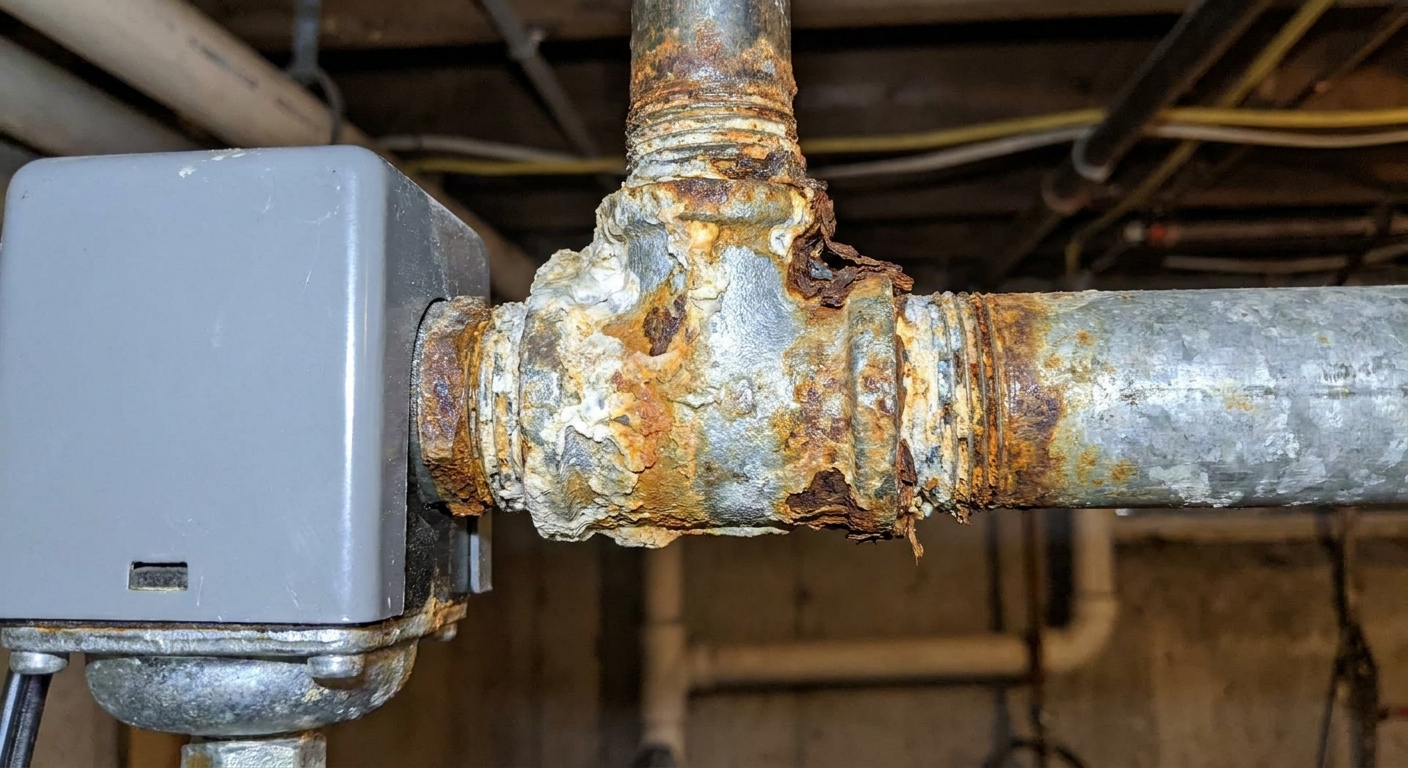
One sneaky failure is a clogged connection between the plumbing and the pressure switch. Iron bacteria, sediment, or scale can block that tiny passage. The switch then “thinks” pressure is lower than it really is, so it keeps the pump running.
Clues
- Gauge shows pressure rising normally, but the pump keeps running.
- You had recent sediment issues, rusty water, or known mineral buildup.
What to do
This is a good “call a pro” moment for many homeowners because it involves depressurizing the system and working around wiring. A well tech will typically:
- Shut off power
- Drain pressure
- Remove and clean or replace the nipple/tee passage and switch
- Confirm correct operation
Cause 3: House-side leak or constant demand
If your isolation test showed the pump shuts off with the house valve closed, focus on leaks and constant water use in the home.
Common culprits
- Toilet flapper leaks or a fill valve that runs periodically
- Water softener or filter system leaking to drain or stuck in a cycle
- Hidden pipe leaks in crawlspaces, basements, or behind walls
- Yard hydrants, hose bibs, irrigation, or a buried line leak
Quick checks
- Walk the basement or crawlspace with a flashlight and look for wet spots, drips, stains.
- Listen at toilets for faint refill noise. Add a few drops of food coloring to the tank and check the bowl 15 minutes later. If color shows up, the flapper is leaking.
- If you have a yard line, look for unusually green strips of grass or soggy soil when it has not rained.
Even a “small” leak can keep a pump from ever reaching cut-out. The pump is trying to fill a bucket with a hole in it.
Cause 4: Pump or well cannot build pressure
If you close the valve to the house and the pump still will not hit cut-out, you are usually looking at a pump-side problem. Here are the big ones.
Worn pump or damaged impellers
A submersible pump can wear out gradually. A jet pump can lose prime or have internal wear. Either way, it may still move some water but cannot build the higher pressure needed for cut-out.
Low well yield
If the well cannot supply enough water, the pump can struggle to build pressure. Sometimes this looks like a slow climb on the gauge that never quite gets there, especially after heavy water use.
Bad check valve or foot valve
A leaking check valve can allow water to bleed back toward the well. The pump runs, builds a little pressure, then loses ground. This is more common on jet pump setups but can also show up in other configurations.
Restriction upstream of the tank or switch
Restrictions that matter for “won’t shut off” are the ones between the pump and the pressure tank/pressure switch, or restrictions that block the switch sensing passage (like a clogged tank tee or switch nipple). If the system cannot move water freely into the tank or cannot “show” the switch the true pressure, cut-out may never happen.
A clogged whole-house filter or treatment unit after the pressure tank usually shows up as weak flow at fixtures, not a pump that never reaches cut-out, because the tank and switch can still pressurize normally.
Reality check: Once you are into pump wear, check valves, well yield, controller issues, or pull-the-pump territory, it is time for a well pro. Those repairs can go sideways fast without the right gear.
Cause 5: Settings or mismatched equipment
Sometimes the system is set up in a way that makes cut-out unrealistic. For example, a pressure switch set to 40/60 paired with a pump that can barely reach 55 psi under current conditions will run forever trying to get that last few psi.
This can happen after someone replaces a pressure switch, changes settings, adds equipment, or replaces a pump with a different model.
If you suspect this, the fix is not guesswork. It is confirming pump capability, switch settings, tank precharge, and system restrictions as a whole.
What not to do
- Do not keep resetting breakers if the pump runs nonstop or trips. That is how motors die.
- Do not crank up pressure switch settings to “force” shutoff. You can exceed safe pressures and still not solve the root issue.
- Do not ignore a running pump overnight. Continuous run time is heat, wear, and potential damage.
- Do not assume it is the pressure tank. A bad tank usually causes short cycling (rapid on-off), not a pump that never shuts off. The pump hits cut-out fast because there is little usable air cushion, then drops fast when water is used, so it cycles constantly.
When to call a pro
I am all for homeowner diagnostics, but there is a clean line where the smart move is picking up the phone.
- Your pump runs continuously and pressure will not rise above 20 to 30 psi even with the house valve closed.
- You see burned wiring, melted switch components, or arcing.
- You suspect a stuck relay/control box or a constant-pressure controller issue and you are not 100 percent sure what you are looking at.
- The well system is losing prime (jet pump) or you suspect a failed check valve.
- You suspect low well yield or the pump may be sucking air.
- The fix likely requires pulling a submersible pump or working in the well casing.
If you are not sure, describe what the gauge does, what happens when you close the house valve (or which branches you shut off), and any recent changes to the system. That information helps a tech show up prepared, and it often saves you money.
FAQ
Is it safe to let a well pump run continuously?
Not for long. Many pumps have thermal protection, but relying on it is rough on the motor. Continuous running can overheat the pump, wear components quickly, and in the worst cases contribute to control or wiring failure.
Could a bad pressure gauge cause a pump to run nonstop?
A bad gauge does not usually cause nonstop running by itself, but it can trick you into misdiagnosing the issue. The pressure switch does the controlling, not the gauge. That said, a clogged sensing path to the switch can make the switch “think” pressure is low, and that will keep the pump running.
If I close the valve to the house and the pump shuts off, what is the next step?
Hunt for leaks and constant water use on the house side. Toilets and softeners are top suspects, followed by hidden leaks and underground yard lines.
Why does my pump reach 50 psi but never shuts off on a 30/50 switch?
If the gauge is accurate and it is truly at or above cut-out, suspect the pressure switch contacts are stuck, a relay/control box is stuck, or the switch is not sensing pressure correctly due to a clogged port. That is a good time to shut off power and have the control and its plumbing connection inspected.
The 30-Second Cheat Sheet
Essential takeaways for: Well Pump Won't Shut Off? Causes and Checks
What “won’t shut off” usually means
- On most standard well systems (pressure tank + pressure switch), nonstop running means the pump is not reaching cut-out pressure, so the switch never turns it off.
- Common causes: leak or constant demand on the house side, bad or stuck pressure switch, clogged switch sensing port, or a pump/well issue that cannot build pressure.
- Exception: some homes use constant-pressure/VFD controls or separate relays/control boxes. Those can fail in different ways and may not follow the same rules.
Fast, safe checks
- Stop all water use (fixtures off, no appliances running) and watch the pressure gauge for 2 to 3 minutes.
- Isolation test: Close the valve from the pressure tank to the house and watch the gauge (if you have that valve).
- If it shuts off with the house valve closed, suspect a house-side leak/constant use (toilet flapper, softener leaking to drain, hidden pipe leak, underground yard line).
- If it still will not shut off with the house isolated, suspect pump, well, check valve, a restriction upstream of the tank/switch, or a pressure switch sensing problem.
Do not do this
- Do not leave a nonstop-running pump unattended overnight.
- Do not crank pressure switch adjustments to “force” shutoff.
- Do not keep cycling the breaker if it trips.
Call a well pro if
- Pressure will not climb above 20 to 30 psi even with the house valve closed.
- You see burned wiring, arcing, melted parts, or smell overheating.
- You suspect low well yield, a bad check valve, controller issues, or anything that may require pulling the pump.
💡 Tip: Scroll up to read the full article for detailed, step-by-step instructions.
⬆️ Back to top
About Grit
Content Creator @ Grit & Home
Grit is Grit & Home’s little blue clay courier, delivering big questions about the place you call home. Expect practical ideas, a raised eyebrow, and a satchel full of curiosity.